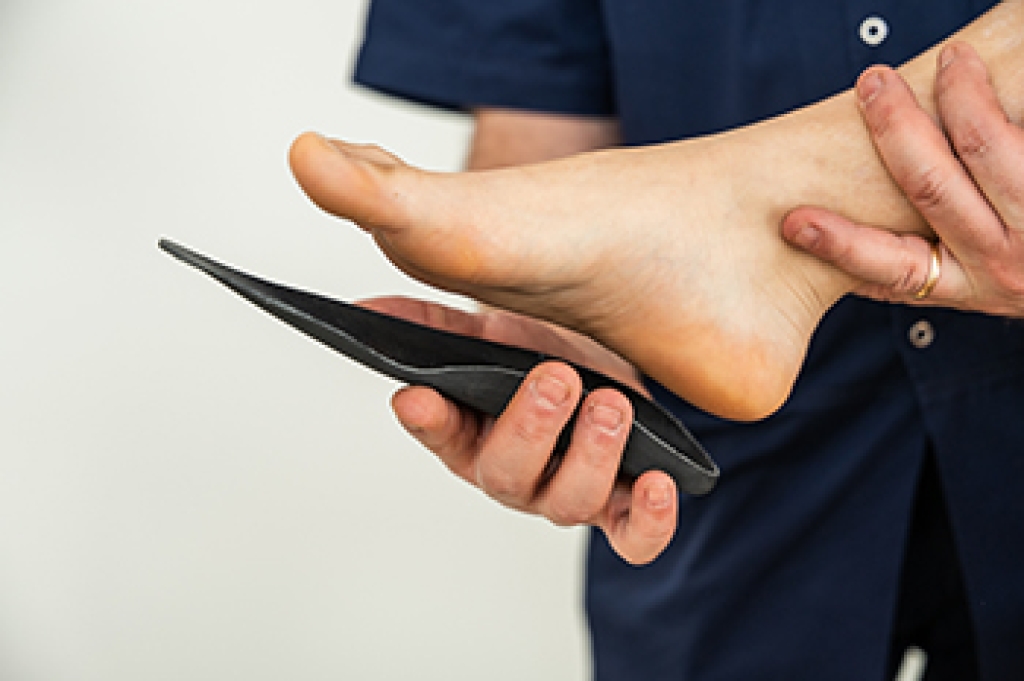
Benefits of Orthotics and Podiatric Guidance

Orthotics are medical devices placed inside shoes to support and align the feet during standing and walking. They are used to help balance the foot in a neutral position, improving overall posture and reducing strain on the ankles, knees, hips, and lower back. Orthotics also cushion the foot from excessive pounding, helping absorb shock and protect joints and soft tissues. By improving alignment and reducing pressure, orthotics may help control pain caused by conditions such as plantar fasciitis, arthritis, and foot fatigue. A podiatrist can evaluate foot structure, gait, and activity level to determine if orthotics are appropriate. Custom orthotics are designed to address individual needs and provide long-term support. If foot pain or instability is affecting your daily life, it is suggested that you schedule a visit with a podiatrist to learn how orthotics can improve comfort and mobility.

If you are having discomfort in your feet and would like to try orthotics, contact one of our podiatrists from Houston Foot and Ankle Care. Our doctors can provide the care you need to keep you pain-free and on your feet.

What Are Orthotics?

Orthotics are inserts you can place into your shoes to help with a variety of foot problems such as flat feet or foot pain. Orthotics provide relief and comfort for minor foot and heel pain but can’t correct serious biomechanical problems in your feet.

Over-the-Counter Inserts

Orthotics come in a wide variety of over-the-counter inserts that are used to treat foot pain, heel pain, and minor problems. For example, arch supports can be inserted into your shoes to help correct overarched or flat feet, while gel insoles are often used because they provide comfort and relief from foot and heel pain by alleviating pressure.

Prescription Orthotics

If over-the-counter inserts don’t work for you or if you have a more severe foot concern, it is possible to have your podiatrist prescribe custom orthotics. These high-quality inserts are designed to treat problems such as abnormal motion, plantar fasciitis, and severe forms of heel pain. They can even be used to help patients suffering from diabetes by treating foot ulcers and painful calluses and are usually molded to your feet individually, which allows them to provide full support and comfort.

If you are experiencing minor to severe foot or heel pain, it’s recommended to speak with your podiatrist about the possibilities of using orthotics. A podiatrist can determine which type of orthotic is right for you and allow you to take the first steps towards being pain-free.

If you have any questions, please feel free to contact our offices located in Inner Loop, Southwest, Greater Heights, and Pearland, TX . We offer the newest diagnostic and treatment technologies for all your foot care needs.


Read more about Ankle Foot Orthotics for Athletes

Foot Anatomy and Its Role in Long-Distance Running

During long-distance running, foot anatomy plays a critical role in efficiency, balance, and injury prevention. The gait cycle places repeated stress on the foot as it absorbs impact and propels the body forward. Intrinsic muscles within the foot provide stability, arch support, and fine control, while extrinsic muscles originating in the leg generate power and guide motion. When these systems are overworked or imbalanced, running injuries like tendinitis and stress reactions may develop. Poor mechanics can increase strain on bones, muscles, and connective tissues, over time. A podiatrist can analyze running gait, identify biomechanical faults, and recommend custom orthotics, footwear guidance, and other targeted treatments. If you have foot pain from running, it is suggested that you consult a podiatrist who can offer effective treatment and prevention tips.

If you have any concerns about your feet, contact one of our podiatrists from Houston Foot and Ankle Care. Our doctors can provide the care you need to keep you pain-free and on your feet.

Biomechanics in Podiatry

Podiatric biomechanics is a particular sector of specialty podiatry with licensed practitioners who are trained to diagnose and treat conditions affecting the foot, ankle and lower leg. Biomechanics deals with the forces that act against the body, causing an interference with the biological structures. It focuses on the movement of the ankle, the foot and the forces that interact with them.

A History of Biomechanics

  • Biomechanics dates back to the BC era in Egypt where evidence of professional foot care has been recorded.
  • In 1974, biomechanics gained a higher profile from the studies of Merton Root, who claimed that by changing or controlling the forces between the ankle and the foot, corrections or conditions could be implemented to gain strength and coordination in the area.

Modern technological improvements are based on past theories and therapeutic processes that provide a better understanding of podiatric concepts for biomechanics. Computers can provide accurate information about the forces and patterns of the feet and lower legs.

Understanding biomechanics of the feet can help improve and eliminate pain, stopping further stress to the foot.

If you have any questions please feel free to contact our offices located in Inner Loop, Southwest, Greater Heights, and Pearland, TX . We offer the newest diagnostic and treatment technologies for all your foot and ankle needs.

Read more about Biomechanics in Podiatry

Are Bunions Affecting Your Everyday Life?

Have you noticed a bony protrusion on the side of your big toe? If so, you may have developed the foot condition known as a bunion. Don't let bunions interfere with your daily activities.

Types of Athlete’s Foot

Athlete’s foot is a common fungal infection that affects the skin of the feet and thrives in warm moist environments. One type of athlete's foot is interdigital athlete’s foot, which develops between the toes causing redness, itching, peeling skin and burning discomfort. Moccasin-type athlete’s foot involves the soles and sides of the feet leading to dry thickened cracked skin that can spread slowly. Vesicular athlete’s foot has fluid-filled blisters often accompanied by intense itching and inflammation. Additionally, ulcerative athlete’s foot is the most severe form and may cause open sores, swelling, pain and secondary bacterial infection. A podiatrist can properly diagnose the specific type and provide targeted treatment. Included are prescription antifungal medication, skin care guidance, and preventive strategies. If you have symptoms of athlete’s foot, it is suggested that you consult a podiatrist who can make a proper diagnosis and provide treatment.

Athlete’s Foot

Athlete’s foot is often an uncomfortable condition to experience. Thankfully, podiatrists specialize in treating athlete’s foot and offer the best treatment options. If you have any questions about athlete’s foot, consult with one of our podiatrists from Houston Foot and Ankle Care. Our doctors will assess your condition and provide you with quality treatment.

What Is Athlete’s Foot?

Tinea pedis, more commonly known as athlete’s foot, is a non-serious and common fungal infection of the foot. Athlete’s foot is contagious and can be contracted by touching someone who has it or infected surfaces. The most common places contaminated by it are public showers, locker rooms, and swimming pools. Once contracted, it grows on feet that are left inside moist, dark, and warm shoes and socks.

Prevention

The most effective ways to prevent athlete’s foot include:

  • Thoroughly washing and drying feet
  • Avoid going barefoot in locker rooms and public showers
  • Using shower shoes in public showers
  • Wearing socks that allow the feet to breathe
  • Changing socks and shoes frequently if you sweat a lot

Symptoms

Athlete’s foot initially occurs as a rash between the toes. However, if left undiagnosed, it can spread to the sides and bottom of the feet, toenails, and if touched by hand, the hands themselves. Symptoms include:

  • Redness
  • Burning
  • Itching
  • Scaly and peeling skin

Diagnosis and Treatment

Diagnosis is quick and easy. Skin samples will be taken and either viewed under a microscope or sent to a lab for testing. Sometimes, a podiatrist can diagnose it based on simply looking at it. Once confirmed, treatment options include oral and topical antifungal medications.

If you have any questions, please feel free to contact our offices located in Inner Loop, Southwest, Greater Heights, and Pearland, TX . We offer the newest diagnostic and treatment technologies for all your foot care needs.

Read more about Athlete's Foot

Cellulitis of the Feet

Cellulitis is a bacterial skin infection that affects the deeper layers of the skin and soft tissue, often involving the feet and ankles. It can cause redness, warmth, swelling, and pain, sometimes spreading quickly. In the feet, cellulitis may begin through a cut, blister, or ulcer. It is often confused with gout because both conditions can cause sudden swelling, redness, and significant pain. Gout symptoms typically include intense joint pain, stiffness, and inflammation, often starting in the big toe. Cellulitis symptoms also include tenderness, fever, and skin that appears tight or shiny. Cellulitis is caused by bacteria entering the skin, while gout is caused by uric acid buildup. A podiatrist can diagnose the condition, provide appropriate treatment, and help prevent complications. If you have any of the above symptoms, it is suggested that you promptly consult a podiatrist who can guide you toward appropriate relief and treatment solutions.

Foot Pain

Foot pain can be extremely painful and debilitating. If you have a foot pain, consult with one of our podiatrists from Houston Foot and Ankle Care. Our doctors will assess your condition and provide you with quality foot and ankle treatment.

Causes

Foot pain is a very broad condition that could be caused by one or more ailments. The most common include:

  • Bunions
  • Hammertoes
  • Plantar Fasciitis
  • Bone Spurs
  • Corns
  • Tarsal Tunnel Syndrome
  • Ingrown Toenails
  • Arthritis (such as Gout, Rheumatoid, and Osteoarthritis)
  • Flat Feet
  • Injury (from stress fractures, broken toe, foot, ankle, Achilles tendon ruptures, and sprains)
  • And more

Diagnosis

To figure out the cause of foot pain, podiatrists utilize several different methods. This can range from simple visual inspections and sensation tests to X-rays and MRI scans. Prior medical history, family medical history, and any recent physical traumatic events will all be taken into consideration for a proper diagnosis.

Treatment

Treatment depends upon the cause of the foot pain. Whether it is resting, staying off the foot, or having surgery; podiatrists have a number of treatment options available for foot pain.

If you have any questions, please feel free to contact our offices located in Inner Loop, Southwest, Greater Heights, and Pearland, TX . We offer the newest diagnostic and treatment technologies for all your foot care needs.

Read more about Foot Pain

Connect With Us

Advanced Podiatric Procedures & Services in the Houston, TX 77027, 77074, 77007 and Pearland, TX 77584 areas