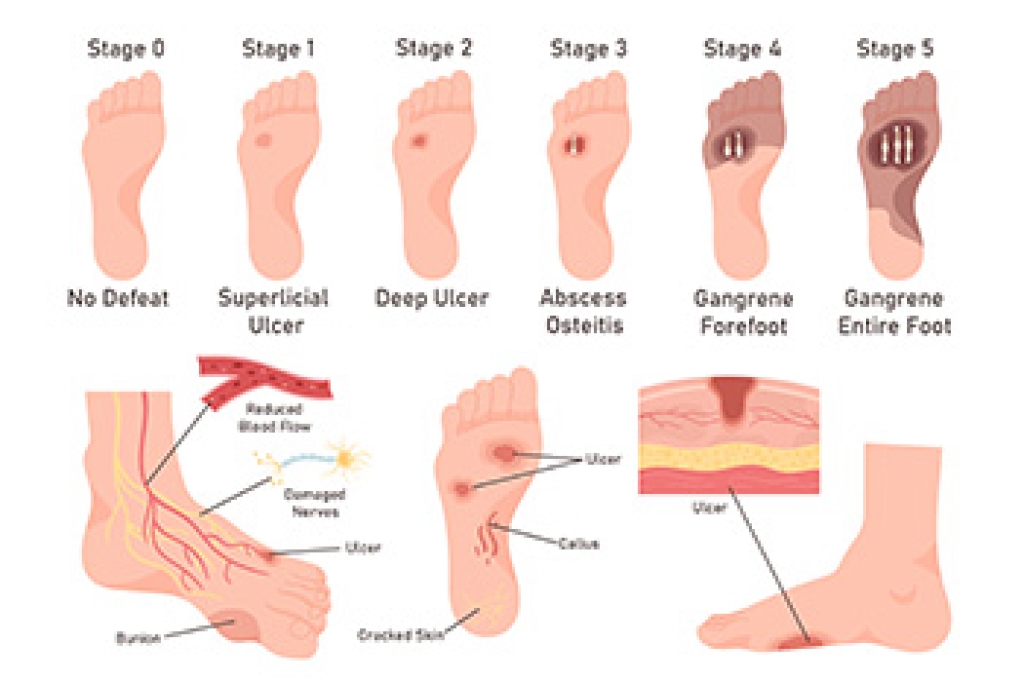
Stages of Diabetic Foot Ulcers

A diabetic foot ulcer is an open sore that develops on the foot of someone with diabetes. High blood sugar can damage nerves and blood vessels, making injuries harder to notice and slower to heal. Early signs include redness, swelling, or a small blister. Other symptoms include drainage, odor, or skin color changes. Recognizing changes early can help protect the foot, support healing, and lower the risk of serious complications.

Understanding the stages of foot health can make prevention easier. A normal foot has healthy skin, good circulation, and intact sensation. An at-risk foot may have calluses, reduced sensation, or poor circulation. A foot with an ulcer has a break in the skin that needs professional evaluation. An infected foot may become increasingly red, swollen, or draining. Risk factors include diabetes, smoking, and previous wounds.


A podiatrist begins treatment by examining the wound and checking circulation, sensation, and infection. The ulcer may be measured, photographed, and carefully cleaned. Damaged tissue may be removed through debridement, when appropriate. Treatment may include wearing specialized footwear, off-loading devices, or wound dressings. If infection is present, appropriate medication may be needed. Good blood sugar management also supports healing and recovery over time.


Diabetic foot ulcers should never be ignored. Regular foot checks, wearing properly fitted footwear, and diabetes management can help lower ulcer risk. Keep feet clean and dry, avoid walking barefoot, and contact a podiatrist when you notice a wound or unusual change. Podiatric care can identify the cause, protect surrounding tissue, and support steady healing. If you have a diabetic foot ulcer, it is strongly suggested that you are under the care of a podiatrist who can help you to manage this serious condition.

Wound care is an important part in dealing with diabetes. If you have diabetes and a foot wound or would like more information about wound care for diabetics, consult with one of our podiatrists from Houston Foot and Ankle Care. Our doctors will assess your condition and provide you with quality foot and ankle treatment.

What Is Wound Care?

Wound care is the practice of taking proper care of a wound. This can range from the smallest to the largest of wounds. While everyone can benefit from proper wound care, it is much more important for diabetics. Diabetics often suffer from poor blood circulation which causes wounds to heal much slower than they would in a non-diabetic. 

What Is the Importance of Wound Care?

While it may not seem apparent with small ulcers on the foot, for diabetics, any size ulcer can become infected. Diabetics often also suffer from neuropathy, or nerve loss. This means they might not even feel when they have an ulcer on their foot. If the wound becomes severely infected, amputation may be necessary. Therefore, it is of the upmost importance to properly care for any and all foot wounds.

How to Care for Wounds

The best way to care for foot wounds is to prevent them. For diabetics, this means daily inspections of the feet for any signs of abnormalities or ulcers. It is also recommended to see a podiatrist several times a year for a foot inspection. If you do have an ulcer, run the wound under water to clear dirt from the wound; then apply antibiotic ointment to the wound and cover with a bandage. Bandages should be changed daily and keeping pressure off the wound is smart. It is advised to see a podiatrist, who can keep an eye on it.

If you have any questions please contact our offices located in Inner Loop, Southwest, Greater Heights, and Pearland, TX . We offer the newest diagnostic and treatment technologies for all your foot and ankle needs.


Read more about Wound Care

Why Nurses Develop Foot Pain at Work

Nurses spend much of each shift standing, walking, and moving quickly across hard floors. These demands can place repeated pressure on the feet and ankles, especially during long shifts with limited chances to sit. Pain can develop in the heels, arches, or balls of the feet. Nurses can also experience swelling, muscle fatigue, and sore ankles. Plantar fasciitis, which is irritation of the band of tissue along the bottom of the foot, can cause sharp heel pain. Tendon injuries and stress fractures can also occur when repeated strain exceeds the body’s ability to recover.

Several job-related factors can increase the risk of foot pain in nursing. Long shifts give the feet less time to recover. Hard hospital floors increase the force that travels through the legs. Shoes that lack proper support can add strain, and a narrow toe box can crowd the toes. Poorly-fitting shoes can also cause blisters, corns, or ingrown toenails. Nurses who change how they walk to avoid pain can place added stress on another part of the foot. Persistent discomfort can make it harder to complete rounds, assist patients, and respond quickly.

A podiatrist can identify the source of pain by examining the feet, checking joint movement, and reviewing work demands. X-rays or other imaging tests can help detect fractures or joint damage. Treatment options include custom orthotics to improve support, padding to reduce pressure, or a brace to stabilize an injured area. A podiatrist can also recommend work shoes with proper cushioning, enough toe space, and a secure fit. Guidance about replacing worn shoes can further reduce strain. Early care can keep a minor problem from interfering with mobility or becoming more difficult to treat properly. If you have foot pain from standing for long hours on the job, it is suggested that you schedule an appointment with a podiatrist for a diagnosis and appropriate treatment.

While working on the feet, it is important to take the proper care of them. For more information about working on your feet, contact one of our podiatrists from Houston Foot and Ankle Care. Our doctors will treat your foot and ankle needs.

Working on Your Feet

Standing on your feet for long periods of time can cause stress and pain in your feet. Your whole body may experience change in terms of posture, back pain, bunions, callouses and or plantar warts. There are ways to avoid these conditions with proper foot care, smart choices and correct posture.

Positive Changes

Negative heeled shoe – Choosing this shoe type places the heel slightly lower than the ball of the foot. These are great for overall foot health. Find shoes that fit you correctly.

Go barefoot – Our feet were not designed to be enclosed for all hours of the day. Try to periodically expose your feet to air.

Eliminate Pain

Foot Exercises – Performing simple exercises, incorporating yoga and doing stretches are beneficial. This will allow increased blood flow to the area and muscles of the foot.

Achilles tendon – Stretching the foot out flat on the floor will relax the calf muscles and tendon. These exercises can be performed almost anywhere. Make sure you add these exercises to your daily regimen. 

With a little bit of this information and knowing more about foot health, you will notice changes. Foot stretches and proper footwear will help with pain and prevent further issues.

If you have any questions please contact our offices located in Inner Loop, Southwest, Greater Heights, and Pearland, TX . We offer the newest diagnostic and treatment technologies for all your foot and ankle needs.

Read more about Working on Your Feet

Reminder: When Was the Last Time...?

Custom orthotics, or shoe inserts, should be periodically replaced. Orthotics must fit properly to give you the best results. Protect your feet and ankles!

Facts About Achilles Tendon Ruptures and Recovery

The Achilles tendon is a band of tissue that connects the calf muscles to the heel bone. It helps move the foot while taking a step, running, or jumping. Despite its strength, the tendon can rupture when it is exposed to sudden, powerful force. Achilles tendon ruptures occur in high-impact sports like football, basketball, and soccer. Athletes in their 30s and 40s can face greater risk because the tendon tissue can weaken with age while they remain active in demanding sports.

An Achilles tendon rupture can happen without warning. A sudden change in direction, awkward landing, or forceful push from the foot can place stress on the tendon. Some people have tissue changes before the injury but experience no previous pain. A rupture can leave the tendon disconnected, reducing the ability of the calf muscle to move the foot. Recovery can be lengthy because the tendon and surrounding tissues need time to heal and regain strength. Treatment can involve surgery or a nonsurgical approach, depending on the injury and the patient's activity goals.

A podiatrist can evaluate Achilles tendon pain or a suspected rupture and determine the extent of the injury. The examination can assess movement, strength, and the connection between the calf and heel. Treatment can protect the injured tendon while it heals and help restore function. A podiatrist can also discuss ways to reduce injury risk, including choosing shoes that provide proper support and are appropriate for the activity. Returning to sports requires careful planning because recovery from a rupture can take many months. If you have injured your Achilles tendon, it is suggested that you schedule an appointment with a podiatrist for effective relief and treatment solutions. 

Achilles tendon injuries need immediate attention to avoid future complications. If you have any concerns, contact one of our podiatrists of Houston Foot and Ankle Care. Our doctors can provide the care you need to keep you pain-free and on your feet.

What Is the Achilles Tendon?

The Achilles tendon is a tendon that connects the lower leg muscles and calf to the heel of the foot. It is the strongest tendon in the human body and is essential for making movement possible. Because this tendon is such an integral part of the body, any injuries to it can create immense difficulties and should immediately be presented to a doctor.

What Are the Symptoms of an Achilles Tendon Injury?

There are various types of injuries that can affect the Achilles tendon. The two most common injuries are Achilles tendinitis and ruptures of the tendon.

Achilles Tendinitis Symptoms

  • Inflammation
  • Dull to severe pain
  • Increased blood flow to the tendon
  • Thickening of the tendon

Rupture Symptoms

  • Extreme pain and swelling in the foot
  • Total immobility

Treatment and Prevention

Achilles tendon injuries are diagnosed by a thorough physical evaluation, which can include an MRI. Treatment involves rest, physical therapy, and in some cases, surgery. However, various preventative measures can be taken to avoid these injuries, such as:

  • Thorough stretching of the tendon before and after exercise
  • Strengthening exercises like calf raises, squats, leg curls, leg extensions, leg raises, lunges, and leg presses

If you have any questions please feel free to contact our offices located in Inner Loop, Southwest, Greater Heights, and Pearland, TX . We offer the newest diagnostic tools and technology to treat your foot and ankle needs.

Read more about Achilles Tendon Injuries

Causes and Treatment of Foot Stress Fractures

A foot stress fracture is a small crack in a bone caused by repeated pressure. It develops when bone tissue breaks down faster than the body can rebuild it. Runners, dancers, and athletes in high-impact sports face greater risk. A sudden increase in training can place too much strain on the feet. Other risk factors include low bone strength, poor foot alignment, and shoes that lack proper support. Pain usually develops gradually and worsens with activity. Swelling and tenderness can occur near the injured bone.

A podiatrist can determine whether the pain comes from a stress fracture or another foot problem. The examination includes a review of recent activities, the location of tenderness, and changes in training habits. X-rays can help identify a fracture, but a hairline crack does not always appear. A podiatrist can order an MRI scan or another imaging test for a closer view. Early diagnosis is important because continued pressure can enlarge the crack and delay healing. A serious fracture can also move out of its normal position. Surgery is rarely required, but it can become necessary when a fracture is unstable or fails to heal properly.

Rest from the activity that caused the injury gives the bone time to heal. A podiatrist can protect the foot with a walking boot, cast, or crutches. The choice depends on the injured bone and the severity of the crack. Follow-up visits allow the podiatrist to track healing and decide when activity can safely resume. Returning too quickly raises the chance of another injury. Prevention includes increasing training by no more than 10 percent each week and avoiding sudden changes in intensity. Patients should choose well-fitting shoes designed for their activity and replace worn-out pairs. A podiatrist can assess foot structure, recommend custom orthotics, and guide a safe return to exercise. If you have symptoms of a foot stress fracture, it is suggested that you schedule an appointment with a podiatrist for a diagnosis and appropriate treatment.

Stress fractures occur when there is a tiny crack within a bone. To learn more, contact one of our podiatrists from Houston Foot and Ankle Care. Our doctors can provide the care you need to keep you pain free and on your feet.

How Are They Caused?

Stress fractures are the result of repetitive force being placed on the bone. Since the lower leg and feet often carry most of the body’s weight, stress fractures are likely to occur in these areas. If you rush into a new exercise, you are more likely to develop a stress fracture since you are starting too much, too soon.  Pain resulting from stress fractures may go unnoticed at first, however it may start to worsen over time.

Risk Factors

  • Gender – They are more commonly found in women compared to men.
  • Foot Problems – People with unusual arches in their feet are more likely to develop stress fractures.
  • Certain Sports – Dancers, gymnasts, tennis players, runners, and basketball players are more likely to develop stress fractures.
  • Lack of Nutrients – A lack of vitamin D and calcium may weaken the bones and make you more prone to stress fractures
  • Weak Bones – Osteoporosis can weaken the bones therefore resulting in stress fractures

Stress fractures do not always heal properly, so it is important that you seek help from a podiatrist if you suspect you may have one. Ignoring your stress fracture may cause it to worsen, and you may develop chronic pain as well as additional fractures.

If you have any questions please contact our offices located in Inner Loop, Southwest, Greater Heights, and Pearland, TX . We offer the newest diagnostic and treatment technologies for all your foot and ankle needs.

Read more about Stress Fractures of the Foot and Ankle

Connect With Us

Advanced Podiatric Procedures & Services in the Houston, TX 77027, 77074, 77007 and Pearland, TX 77584 areas