Items filtered by date: May 2025
Signs and Causes of an Infected Foot Blister
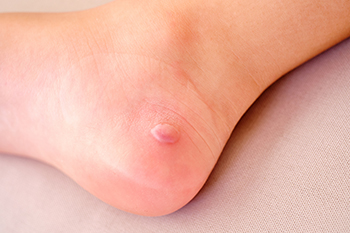
An infected foot blister can become a serious issue if not treated promptly. Common symptoms include increased redness, swelling, warmth, and pain around the blister site. The area may also produce pus or a yellowish fluid, and a foul odor might be present. In some cases, the skin surrounding the blister becomes hard or discolored, and the person may develop a fever or feel generally unwell. These signs indicate the body is reacting to an infection. Blisters can become infected due to friction, poor hygiene, or puncturing the blister with unclean objects. Wearing tight shoes, walking for long periods, or having underlying health conditions like diabetes can also contribute to infection. If you have developed a foot blister that looks like it is infected, it is suggested that you promptly contact a podiatrist who can offer appropriate treatment solutions.
Blisters may appear as a single bubble or in a cluster. They can cause a lot of pain and may be filled with pus, blood, or watery serum. If your feet are hurting, contact one of our podiatrists of Houston Foot and Ankle Care. Our doctors can provide the care you need to keep you pain-free and on your feet.
Foot Blisters
Foot blisters are often the result of friction. This happens due to the constant rubbing from shoes, which can lead to pain.
What Are Foot Blisters?
A foot blister is a small fluid-filled pocket that forms on the upper-most layer of the skin. Blisters are filled with clear fluid and can lead to blood drainage or pus if the area becomes infected.
Symptoms
(Blister symptoms may vary depending on what is causing them)
- Bubble of skin filled with fluid
- Redness
- Moderate to severe pain
- Itching
Prevention & Treatment
In order to prevent blisters, you should be sure to wear comfortable shoes with socks that cushion your feet and absorb sweat. Breaking a blister open may increase your chances of developing an infection. However, if your blister breaks, you should wash the area with soap and water immediately and then apply a bandage to the affected area. If your blisters cause severe pain it is important that you call your podiatrist right away.
If you have any questions, please feel free to contact our offices located in Inner Loop, Southwest, Greater Heights, and Pearland, TX . We offer the newest diagnostic and treatment technologies for all your foot care needs.
Do Your Child's Feet Hurt?

Have your child's feet been examined lately? Healthy feet are happy feet. If your child is complaining of foot pain, it may be a sign of underlying problems.
Helping Seniors Prevent Falls by Managing Common Risk Factors

Preventing falls in the elderly requires attention to several common risk factors. Muscle weakness, especially in the legs, can negatively affect balance. Medication side effects, such as dizziness or drowsiness, may also increase fall risk. Chronic health conditions like arthritis, diabetes, or neurological disorders can interfere with mobility and coordination. Vision changes often make it harder to detect obstacles or judge distances. Inactivity over time can reduce strength and flexibility, making daily movements less steady. Additionally, risky behaviors like standing on a chair to reach high places further increase the chance of a fall. To reduce risk, older adults should stay physically active, use mobility aids when necessary, and ensure home safety. If you have fallen and injured your feet or ankles, it is suggested that you promptly contact a podiatrist who can treat various foot conditions, and guide you on additional fall prevention strategies.
Preventing falls among the elderly is very important. If you are older and have fallen or fear that you are prone to falling, consult with one of our podiatrists from Houston Foot and Ankle Care. Our doctors will assess your condition and provide you with quality advice and care.
Every 11 seconds, an elderly American is being treated in an emergency room for a fall related injury. Falls are the leading cause of head and hip injuries for those 65 and older. Due to decreases in strength, balance, senses, and lack of awareness, elderly persons are very susceptible to falling. Thankfully, there are a number of things older persons can do to prevent falls.
How to Prevent Falls
Some effective methods that older persons can do to prevent falls include:
- Enrolling in strength and balance exercise program to increase balance and strength
- Periodically having your sight and hearing checked
- Discuss any medications you have with a doctor to see if it increases the risk of falling
- Clearing the house of falling hazards and installing devices like grab bars and railings
- Utilizing a walker or cane
- Wearing shoes that provide good support and cushioning
- Talking to family members about falling and increasing awareness
Falling can be a traumatic and embarrassing experience for elderly persons; this can make them less willing to leave the house, and less willing to talk to someone about their fears of falling. Doing such things, however, will increase the likelihood of tripping or losing one’s balance. Knowing the causes of falling and how to prevent them is the best way to mitigate the risk of serious injury.
If you have any questions, please feel free to contact our offices located in Inner Loop, Southwest, Greater Heights, and Pearland, TX . We offer the newest diagnostic and treatment technologies for all your foot care needs.
Pain That Starts in the Heel

Heel pain is a common problem that can make walking difficult. It often begins slowly and gets worse with time. The most common cause is plantar fasciitis, which is irritation of the tissue along the bottom of the foot. Heel spurs, tendon pain, or stress from too much walking or standing can also be to blame. Wearing shoes without enough support can make it worse. Pain may feel sharp in the morning or after rest. It might also hurt more after long periods on your feet. To help it heal, a podiatrist may suggest rest, stretching, better shoes, or custom inserts. If the pain continues, more advanced treatments may be needed. Heel pain should not be ignored. If you are having trouble with your heel, it is suggested you see a podiatrist for diagnosis and appropriate treatment.
Many people suffer from bouts of heel pain. For more information, contact one of our podiatrists of Houston Foot and Ankle Care. Our doctors can provide the care you need to keep you pain-free and on your feet.
Causes of Heel Pain
Heel pain is often associated with plantar fasciitis. The plantar fascia is a band of tissues that extends along the bottom of the foot. A rip or tear in this ligament can cause inflammation of the tissue.
Achilles tendonitis is another cause of heel pain. Inflammation of the Achilles tendon will cause pain from fractures and muscle tearing. Lack of flexibility is also another symptom.
Heel spurs are another cause of pain. When the tissues of the plantar fascia undergo a great deal of stress, it can lead to ligament separation from the heel bone, causing heel spurs.
Why Might Heel Pain Occur?
- Wearing ill-fitting shoes
- Wearing non-supportive shoes
- Weight change
- Excessive running
Treatments
Heel pain should be treated as soon as possible for immediate results. Keeping your feet in a stress-free environment will help. If you suffer from Achilles tendonitis or plantar fasciitis, applying ice will reduce the swelling. Stretching before an exercise like running will help the muscles. Using all these tips will help make heel pain a condition of the past.
If you have any questions please contact our offices located in Inner Loop, Southwest, Greater Heights, and Pearland, TX . We offer the newest diagnostic and treatment technologies for all your foot and ankle needs.
Fractures on the Inner Bump of the Ankle

Fractures on the inner side of the ankle, called medial malleolus fractures, affect the lower end of the tibia. These ankle fractures often result from the foot forcefully rolling inward or outward. The injury may involve a small bone fragment, a clean break, or multiple fracture lines. Symptoms include sharp pain along the inner ankle, swelling, bruising, and difficulty putting weight on the foot. Medial malleolus fractures can occur from direct trauma or repetitive stress, especially in athletes or people with low bone density. Treatment depends on the position and stability of the fractured bone. If the joint remains aligned, immobilization with a boot or cast may be sufficient. However, if the fracture causes joint instability or misalignment, surgery may be needed to reposition and secure the bone using screws, plates, or other methods. A podiatrist can also assess the surrounding cartilage for damage during surgery. If you have pain in the inner side of the ankle, it is suggested that you schedule an appointment with a podiatrist for an exam and appropriate treatment.
Broken ankles need immediate treatment. If you are seeking treatment, contact one of our podiatrists from Houston Foot and Ankle Care. Our doctors can provide the care you need to keep you pain-free and on your feet.
Broken Ankles
A broken ankle is experienced when a person fractures their tibia or fibula in the lower leg and ankle area. Both of these bones are attached at the bottom of the leg and combine to form what we know to be our ankle.
When a physician is referring to a break of the ankle, he or she is usually referring to a break in the area where the tibia and fibula are joined to create our ankle joint. Ankles are more prone to fractures because the ankle is an area that suffers a lot of pressure and stress. There are some obvious signs when a person experiences a fractured ankle, and the following symptoms may be present.
Symptoms of a Fractured Ankle
- Excessive pain when the area is touched or when any pressure is placed on the ankle
- Swelling around the area
- Bruising of the area
- Area appears to be deformed
If you suspect an ankle fracture, it is recommended to seek treatment as soon as possible. The sooner you have your podiatrist diagnose the fracture, the quicker you’ll be on the way towards recovery.
If you have any questions, please feel free to contact our offices located in Inner Loop, Southwest, Greater Heights, and Pearland, TX . We offer the newest diagnostic and treatment technologies for all your foot care needs.

